







Wanna know what happens when a company forgets its branding north star? It happens more than you might think, no matter the industry or marketplace. Business-to-business (B2B) and business-to-consumer (B2C) companies run into that wall regularly, and it absolutely kills any kind of brand awareness and loyalty they’ve built.
Why Brands Lose Focus
In 1997, Steve Jobs explained that while Apple engineers had a lot of great ideas, many of them had to be left behind. That’s a company that has learned the hard way to uncover its core promise and stay true to it no matter what.
Less disciplined companies, in moments of panic, often dilute their brand promise. A dip in sales leads to pushing into new markets that don’t quite fit. A new executive team comes in with bright ideas without understanding the company’s history. A series of acquisitions seems to make sense, but it confuses the marketplace.
These changes occasionally lead to growth and bigger profits. Since everyone’s getting paid, it’s a win, right? Perhaps.
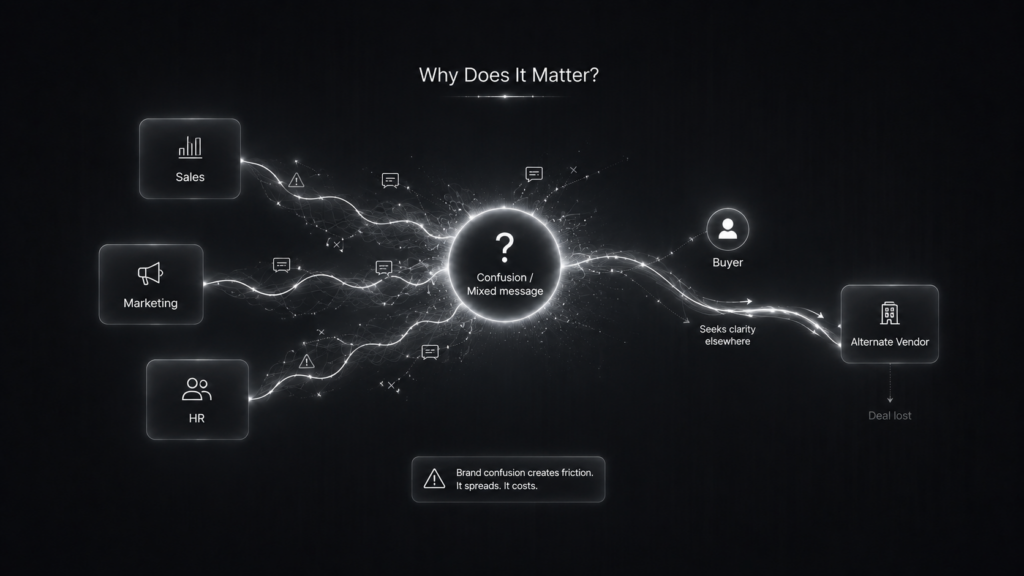
Yet, over time, as businesses drift from their original spark, they inevitably dilute their brand promise, differentiator and positioning, leading to confusion. And that confusion spreads across the organization, from the sales and marketing teams who aren’t sure how to communicate these changes, to the human resources teams who aren’t sure what type of talent to hire. It’s a pervasive thread that threatens a company’s well-being and future.
There is a straight line from a muddled brand to a shrinking bottom line.
How You Know Whether This Is Your Company
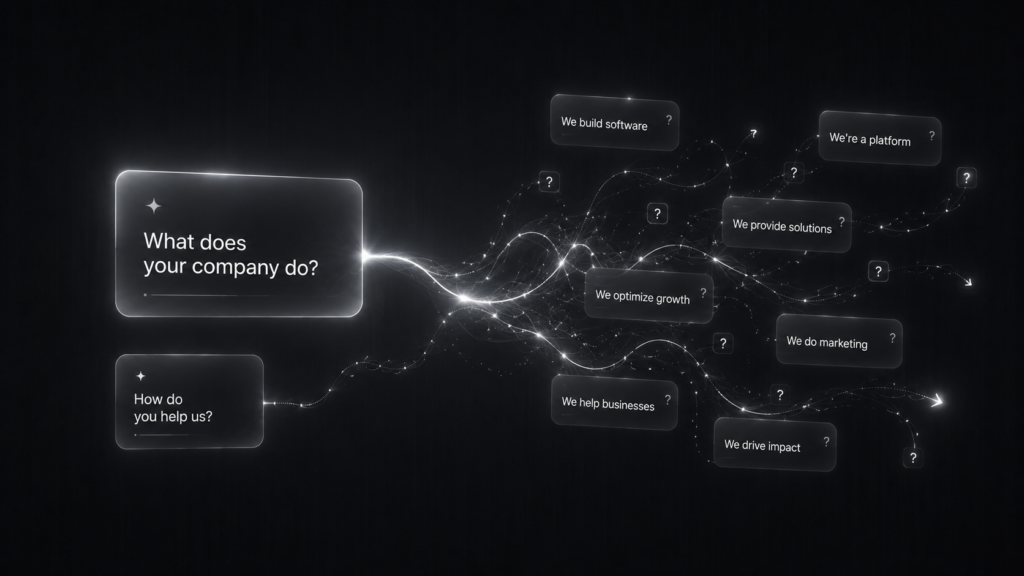
It’s easy. Say you’re at a cocktail party. A new acquaintance asks what your company does. If you can’t answer immediately with a simple statement, then there’s a problem.
Or let’s say you’re talking to a current customer and can’t cleanly explain how you can positively impact their business with your solution. That’s a clue.
Trust your gut. You’ll know whether there’s friction between what you offer and how you’re talking about it. It doesn’t matter whether you’re selling professional services or motor oil. If it’s feeling off, then it’s off.
Why Does It Matter?
Customers don’t want friction during the buying cycle. There is an absolutely straight line from messaging confusion to a customer picking another vendor.
It doesn’t matter whether you’re in the B2B or B2C marketplace; if you confuse the buyer, they will go somewhere else.
That confusion will spread across every department in the company. Your sales team will say the wrong thing to potential buyers. Your marketing team will share the wrong offer. Your internal team, especially the HR team, won’t be able to communicate the company’s core values.
Every department needs a clear story to tell. Without it, you’re losing deals and talent while building a company that doesn’t know what it is.
Where The Work Starts
Talk to everyone—management, staff, customers, vendors, users and anyone else who engages with your company.
Look at the industry. Check whether there’s been a fundamental shift in how watchers talk about your marketplace.
Audit your competitors. Pressure-test your brand positioning to make sure you’re actually standing out, not just saying you do.
Check yourself. Be ruthless, and investigate how you’re showing up at every marketing and communications touchpoint. Are you echoing your position or muddying the waters?
Get an outside perspective. Find an agency or a person who isn’t emotionally attached to the choices that got the company where it is today. That team can ask the hard questions, find the truths that are hard to look at and then build strategies to help you get back to the brand’s north star.
Can AI Help?
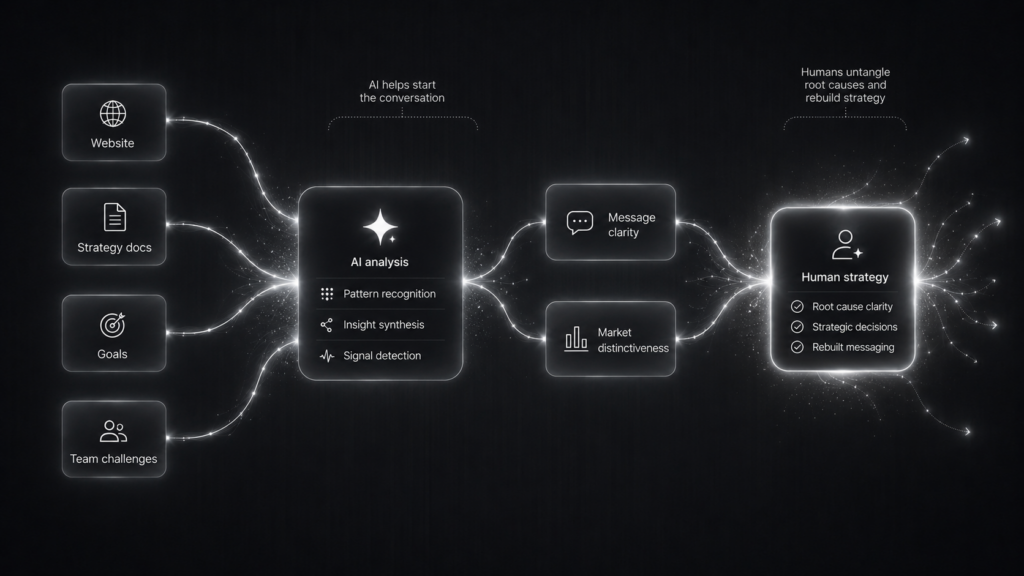
Kinda. Your large language model (LLM) of choice is a good place to start the conversation. Give it the company’s website, strategic documents and your perspectives. Tell it your goals. Tell it about the struggles your team is facing. Ask it whether your message is clear. Ask whether your company stands out in your marketplace.
As good as AI is these days, it can’t untangle the root cause of the confusion or rebuild the company’s strategy. That’s the part that takes a human.
What You’re Trying To Achieve
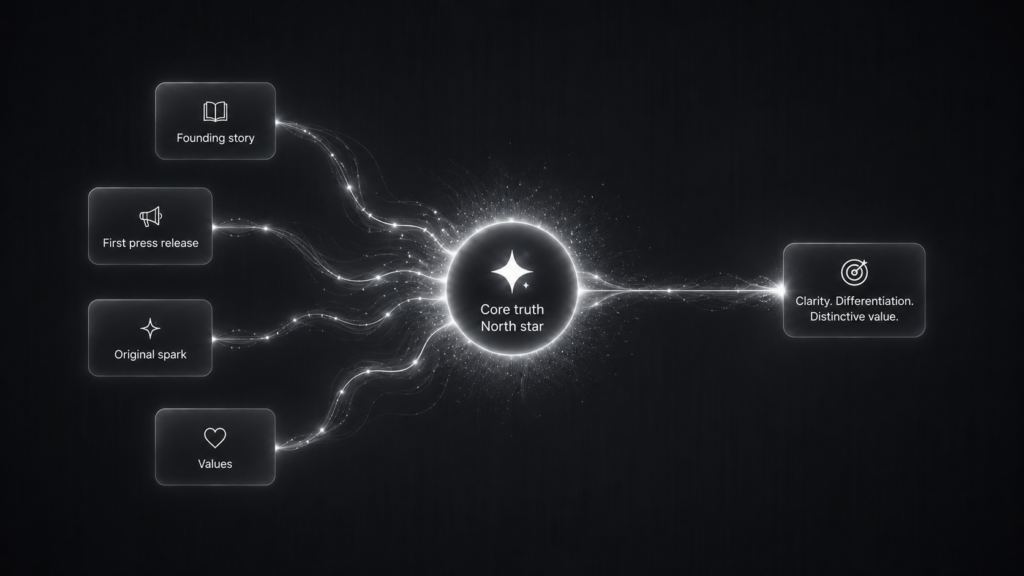
The result of any brand clarity exercise is to uncover the one thing that is authentic to your company. That one thing is often what the company aimed to solve at launch.
In my experience, clarifying an established brand voice often comes down to remembering the inspiration for the company’s launch. If you’re decades away from where it started, go back and read articles about the company’s founding. Look for the first press release. Find the original articles of incorporation. All of that content, unpolished and clearly articulated, is almost always the clearest explanation of the company’s differentiated value.
If you’re at the beginning, take notes. Let your corporate values be the breadcrumbs that you’ll follow years from now when everything is moving fast and you need an anchor.
Yes, businesses evolve (or die), but every move forward must be tied back to the core brand of the company’s original idea, or else you’re just collecting initiatives.
Bottom Line
You’re never very far away from your core brand. Be clear-eyed and honest. Recapture the spark, clean up and get back on the beam.
Then get to work making the changes. As legendary basketball coach John Wooden said, “Never mistake activity for achievement.”
Get your teams together and explain what you found and how you’re going to fix it. An agency partner is helpful here because they can help you pull discovery into clarity and action.